
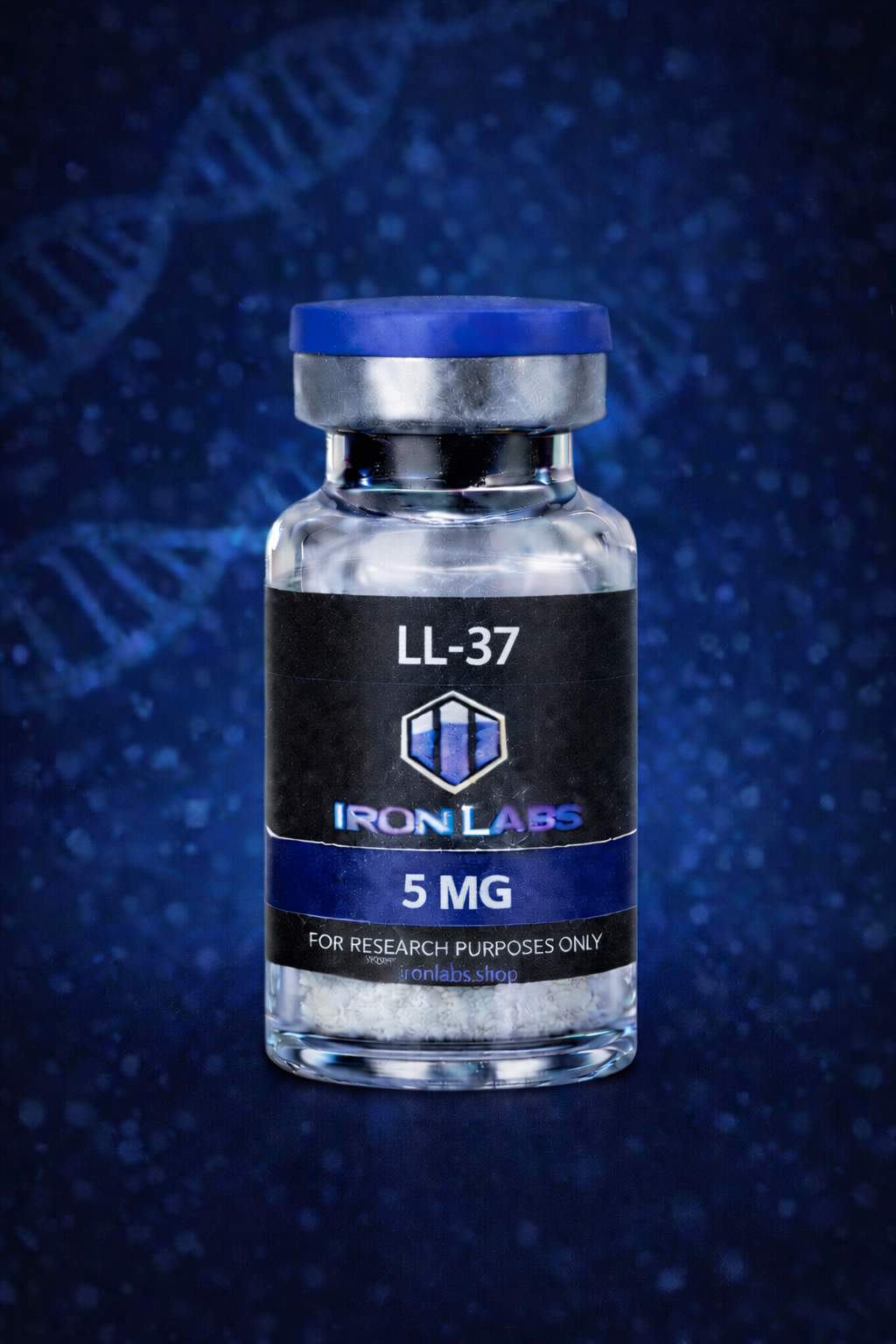
For research use only. All peptides referenced are research chemicals not approved by the FDA for human use. Not for human consumption.
This LL-37 Research Overview examines LL-37, the 37-residue human cathelicidin antimicrobial peptide derived from the CAMP gene product hCAP18. LL-37 is one of the most extensively studied peptides in innate immunity research due to its broad-spectrum antimicrobial activity and its role in modulating immune cell signaling.
LL-37 Research Overview: Background & Discovery
LL-37 was identified as the active peptide fragment cleaved from hCAP18, the sole human cathelicidin precursor protein. Researchers have studied its production by neutrophils, epithelial cells, and other immune cells, particularly in response to infection or tissue injury, making it a frequent reference point in innate immunity and antimicrobial peptide literature.
Research Areas & Mechanisms
This LL-37 Research Overview highlights several mechanisms explored in laboratory research:
- Membrane disruption: In vitro studies have examined LL-37’s amphipathic helical structure and its capacity to disrupt bacterial membranes.
- Biofilm research: Laboratory models have investigated LL-37’s effect on bacterial biofilm formation and established biofilm structures.
- Immunomodulation: Cell culture research has explored LL-37’s role in chemotaxis, cytokine release, and modulation of both innate and adaptive immune responses.
- Wound healing research: Animal and cell models have studied LL-37’s involvement in re-epithelialization and angiogenesis signaling.
- Endotoxin neutralization: Some laboratory studies have examined LL-37’s interaction with bacterial lipopolysaccharide (LPS) and its downstream inflammatory signaling effects.
Across these research areas, LL-37 is generally studied as a multifunctional innate immune peptide rather than a single-mechanism antimicrobial agent.
LL-37 vs. Thymosin Alpha-1 in Research Context
LL-37 and Thymosin Alpha-1 both appear frequently in immune-related peptide research, but their study contexts differ. Thymosin Alpha-1 research centers on T-cell maturation, thymic signaling, and modulation of adaptive immunity. LL-37 research instead focuses on innate immune defense, direct antimicrobial activity, and epithelial barrier signaling, making the two peptides complementary reference points across innate versus adaptive immunology research models.
Laboratory Handling
LL-37 is typically supplied as a lyophilized powder and should be stored at -20°C prior to reconstitution. Once reconstituted with bacteriostatic water, store refrigerated at 2-8°C and use within 14-21 days for research consistency. LL-37 solutions should avoid repeated freeze-thaw cycles and extended exposure to light.
Source LL-37 from Iron Labs
Iron Labs LL-37 is supplied as lyophilized powder accompanied by third-party COA documentation, including HPLC purity and mass spectrometry identity confirmation, to support research reproducibility. Source LL-37 for your research → Iron Labs Research Catalog
Frequently Referenced Research Questions
Is LL-37 the same as hCAP18? No. hCAP18 is the precursor protein, and LL-37 is the active 37-amino-acid peptide fragment cleaved from it during immune cell activation.
Why is LL-37 studied alongside biofilm research? Researchers frequently reference LL-37 in biofilm literature because of its documented interactions with bacterial membrane structures in various in vitro models.
This LL-37 Research Overview will be updated as new laboratory literature becomes available to support ongoing antimicrobial peptide research.
Regulatory Notice
LL-37 is not FDA-approved for any human or veterinary therapeutic application. Iron Labs sells LL-37 exclusively as a research chemical for use by qualified researchers and laboratories. No health, therapeutic, or cosmetic claims are made or implied. Background on cathelicidin peptide research is available via PubMed.
Researchers evaluating this LL-37 Research Overview alongside their own literature review often note that concentration-dependent effects are a recurring theme: lower concentrations tend to favor immunomodulatory signaling in laboratory models, while higher concentrations are more frequently associated with direct membrane-disruptive antimicrobial activity in vitro. This dose-context distinction is a common consideration in experimental design for researchers working with cathelicidin-derived peptides.