For research use only. All peptides referenced are research chemicals not approved by the FDA for human use. Not for human consumption.
This KPV Research Overview examines KPV (lysine-proline-valine), the C-terminal tripeptide fragment of alpha-melanocyte-stimulating hormone (α-MSH), first identified for retaining much of the parent hormone’s anti-inflammatory activity without its pigmentation-related effects. Because of its small size and stability, KPV has become a frequent subject of in vitro and animal-model research into inflammatory signaling, skin barrier biology, and gut mucosal research models.
KPV Research Overview: Background & Discovery
KPV was identified as researchers investigated which fragments of α-MSH retained biological activity relevant to inflammation without triggering melanocortin receptor-driven pigmentation effects. This tripeptide fragment demonstrated that a relatively small sequence could still meaningfully engage inflammatory signaling pathways in laboratory models, making it an efficient candidate for researchers studying structure-activity relationships in melanocortin-derived peptides.
Research Areas & Mechanisms
This KPV Research Overview highlights several biological pathways that laboratory studies have explored:
- NF-κB pathway modulation: Cell culture studies have examined KPV’s capacity to inhibit NF-κB nuclear translocation, a central transcription factor in inflammatory cytokine production.
- Cytokine signaling: Research models have looked at KPV’s effect on IL-1β, IL-6, and TNF-α expression in stimulated cell lines.
- Mast cell and mucosal research: Laboratory studies have investigated KPV in intestinal mucosal models, examining barrier integrity and local inflammatory markers.
- Skin barrier studies: In vitro dermal models have explored KPV’s interaction with keratinocyte inflammatory signaling.
- Oxidative stress research: Some laboratory models have examined KPV alongside markers of oxidative stress in inflamed tissue cultures, though this remains an early area of study.
Across these research areas, KPV is generally studied as a signaling modulator rather than a structural repair agent, distinguishing it from peptides more commonly associated with direct tissue remodeling.
KPV vs. BPC-157 in Research Context
KPV and BPC-157 are both frequently referenced in inflammation and tissue-repair literature, but their proposed mechanisms diverge substantially. BPC-157 research centers on angiogenesis, nitric oxide signaling, and FAK-paxillin pathway activity relevant to musculoskeletal and gastrointestinal models. KPV research instead concentrates on direct suppression of inflammatory transcription factors and cytokine cascades, making it a common reference point in immunology and dermatology-adjacent laboratory work rather than structural tissue repair studies.
Laboratory Handling
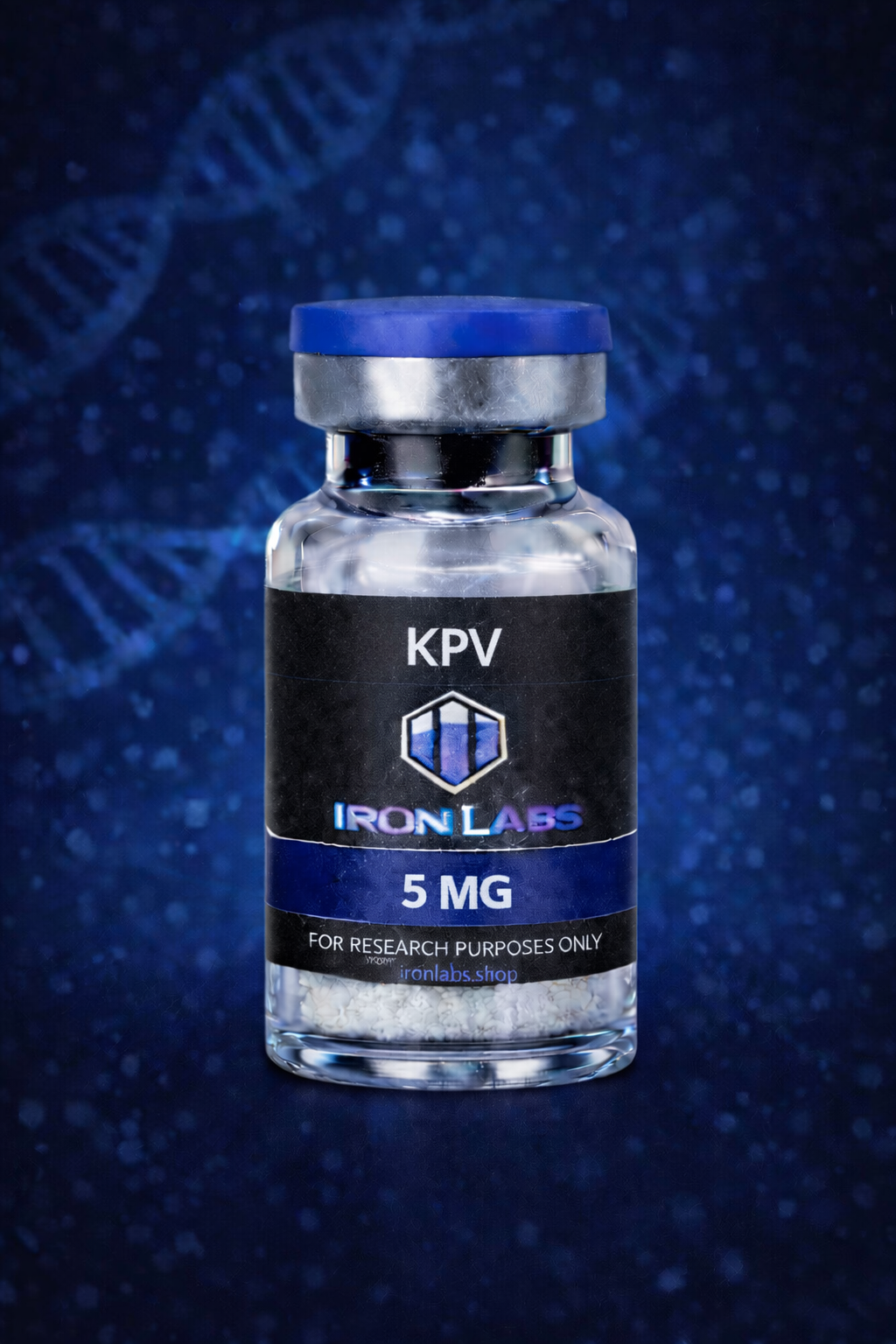
KPV is typically supplied as a lyophilized powder and should be stored at -20°C prior to reconstitution. Once reconstituted with bacteriostatic water, store refrigerated at 2-8°C and use within 14-21 days for research consistency. Avoid repeated freeze-thaw cycles, which can degrade peptide integrity, and protect from prolonged light exposure.
Source KPV from Iron Labs
Iron Labs KPV is supplied as lyophilized powder accompanied by third-party COA documentation, including HPLC purity and mass spectrometry identity confirmation, to support research reproducibility. Source KPV for your research → Iron Labs Research Catalog
Regulatory Notice
KPV is not FDA-approved for any human or veterinary therapeutic application. Iron Labs sells KPV exclusively as a research chemical for use by qualified researchers and laboratories. No health, therapeutic, or cosmetic claims are made or implied. Background on melanocortin-derived peptide research is available via PubMed. This KPV Research Overview is intended solely for laboratory and research reference purposes.
Frequently Referenced Research Questions
Is KPV the same as alpha-MSH? No. KPV is a small tripeptide fragment derived from the C-terminal end of alpha-MSH, retaining select anti-inflammatory signaling properties without the full hormone’s melanocortin receptor-driven pigmentation effects.
How is KPV typically studied alongside other peptides? Researchers frequently reference KPV alongside other immune- and inflammation-focused peptides to compare transcription factor targets, cytokine profiles, and downstream signaling outcomes across different experimental models.
This KPV Research Overview will be updated as new laboratory literature and research summaries become available, supporting researchers who require current background before designing their own studies.