Description
LL-37 Research Peptide: Laboratory Overview
LL-37 is a 37-amino-acid cationic peptide belonging to the cathelicidin family of host defense peptides. In controlled laboratory settings, LL-37 is examined for its interactions with cell membranes, receptor-mediated signaling, and its role in innate immune pathway modulation. Researchers use this compound in in vitro and ex vivo models to investigate how cathelicidin-derived sequences influence cellular responses and signaling cascades in various biological contexts.
Biochemical Properties of LL-37
LL-37 is the only human cathelicidin-derived peptide identified to date, cleaved from the precursor protein hCAP18 by serine protease processing. Its amphipathic helical structure enables membrane interaction and confers the capacity to engage multiple receptor systems including FPRL1 (formyl peptide receptor-like 1). Laboratory studies examining LL-37 frequently investigate its effects on NF-κB signaling, toll-like receptor pathways, and chemokine expression in various cell line models. The net positive charge and helical conformation are key structural features researchers seek to understand in the context of peptide-membrane interaction studies.
Typical Research Applications
Scientific investigations involving LL-37 commonly address the following experimental areas:
- Host defense peptide signaling and receptor interaction studies at immune cell surfaces
- Membrane-active peptide research examining pore formation and lipid bilayer disruption models
- Innate immunity and cytokine regulation in macrophage and epithelial cell models
- Wound healing and tissue remodeling signaling cascade analysis
- Comparative peptide structure-activity studies alongside other cathelicidin-derived fragments
- Biofilm-related research in microbiological in vitro experimental systems
Research groups studying epithelial barrier function and mucosal immunity frequently incorporate LL-37 into experimental designs evaluating cellular signaling responses in airway, gut, and skin tissue models. This broad functional profile makes it a widely referenced compound in preclinical peptide pharmacology.
Experimental Context and Comparative Research
LL-37 is frequently used alongside structurally related compounds in multi-peptide laboratory protocols. For researchers exploring innate immune-related peptide signaling, compounds such as GHK-Cu and Thymosin Alpha-1 represent commonly studied peptides with overlapping immune modulation research applications. Comparative studies between these peptides help establish selectivity profiles and structure-activity relationships relevant to immunology and peptide pharmacology research.
For further scientific context, researchers may consult peer-reviewed literature available through PubMed’s cathelicidin and host defense peptide research index.
Analytical Specifications
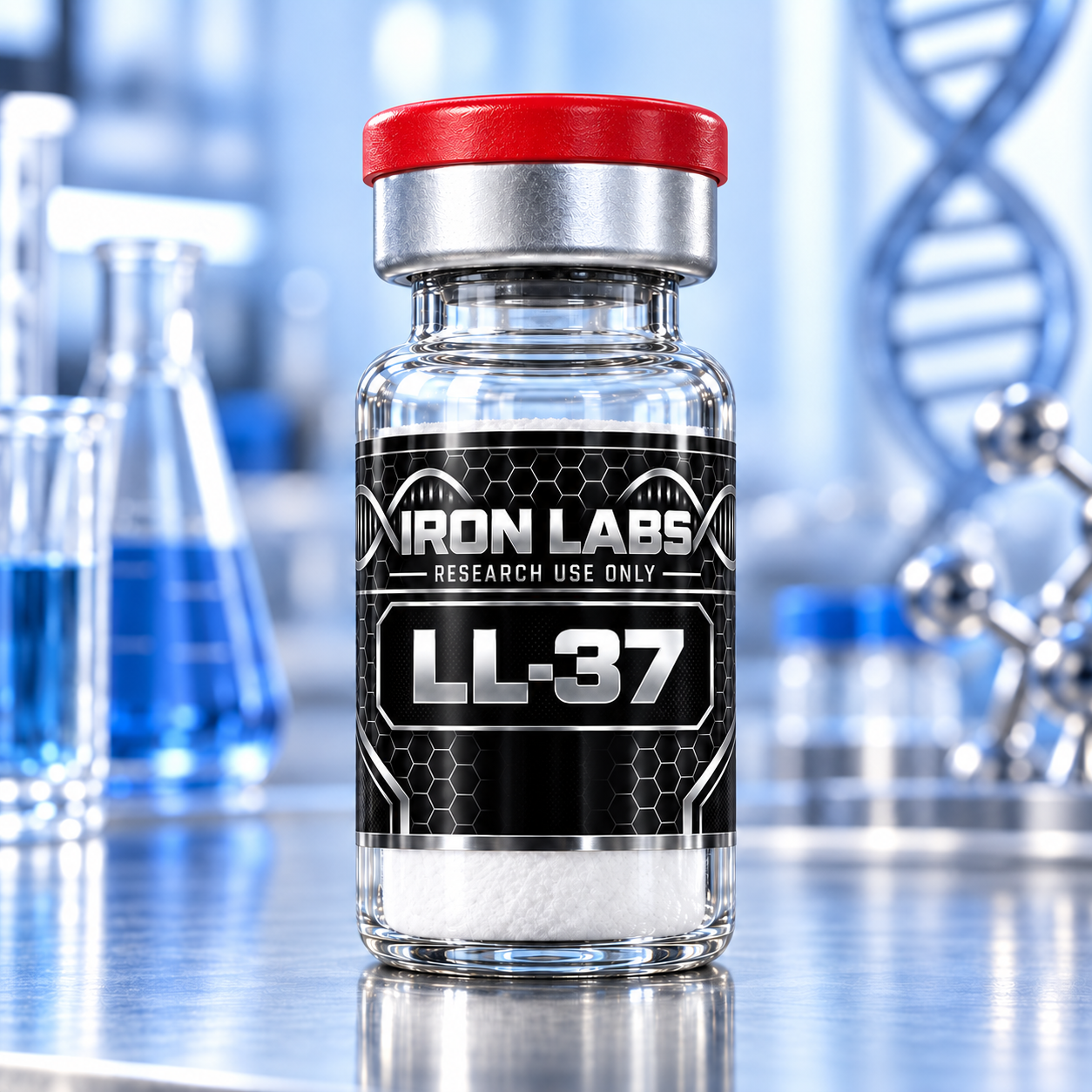
Iron Labs supplies LL-37 at a confirmed purity of ≥99%, verified by high-performance liquid chromatography (HPLC). Each batch is accompanied by a Certificate of Analysis (COA) documenting the specific analytical results for that production lot. The compound is supplied in lyophilized powder format to support long-term storage stability and is compatible with standard reconstitution protocols used in preclinical research. Products are fulfilled from a US-based facility with temperature-aware packaging to maintain compound integrity. Full batch documentation is matched to shipped vials for complete traceability.
Storage and Handling
Upon receipt, lyophilized LL-37 should be stored at −20°C in a desiccated environment. Reconstitution should be performed under sterile conditions using an appropriate solvent as determined by the specific experimental protocol. Reconstituted solutions should be aliquoted and stored at −80°C, used within a timeframe consistent with established stability parameters for cationic peptides. Standard laboratory safety procedures and personal protective equipment should be used throughout handling.
Research Use Only
This compound is supplied strictly for laboratory research purposes. LL-37 is not approved for human consumption, therapeutic administration, or veterinary use. All products sold by Iron Labs are intended exclusively for use by qualified researchers and laboratory professionals operating within appropriate institutional and regulatory frameworks. Purchasers are responsible for compliance with all applicable local, national, and institutional regulations governing the acquisition and use of research compounds.
Structural Considerations for Research Protocols
When designing experimental protocols using this cathelicidin-derived peptide, researchers should account for its amphipathic helical structure and susceptibility to proteolytic degradation under standard physiological conditions. Many laboratory protocols employ serum-free media or protease inhibitor cocktails to preserve peptide integrity during cell-based assays. Concentration optimization is particularly important, as cellular responses may differ significantly across concentration ranges studied in dose-response experiments. These variables are well-documented in published literature and should be considered when establishing comparative baselines in new experimental systems.