For research use only. All peptides referenced are research chemicals not approved by the FDA for human use. Not for human consumption.
This Thymosin Alpha-1 Research Overview examines Thymosin Alpha-1 (Tα1), a 28-amino-acid peptide fragment derived from the prothymosin alpha protein. Originally isolated from thymic tissue, Thymosin Alpha-1 has become one of the most widely referenced peptides in immune modulation research due to its role in T-cell maturation and broader immune signaling pathways.
Thymosin Alpha-1 Research Overview: Background & Discovery
Thymosin Alpha-1 was first characterized from thymic extracts as researchers investigated factors responsible for T-lymphocyte maturation. Since its isolation, it has been studied extensively as a reference peptide in immunology research, particularly regarding its influence on dendritic cell function and adaptive immune signaling cascades.
Research Areas & Mechanisms
This Thymosin Alpha-1 Research Overview highlights several mechanisms explored in laboratory literature:
- T-cell maturation: Laboratory models have examined Thymosin Alpha-1’s role in promoting maturation and differentiation of T-lymphocytes within thymic tissue cultures.
- Dendritic cell signaling: Cell culture research has explored its effect on dendritic cell activation and antigen presentation pathways.
- Cytokine modulation: Research models have investigated Thymosin Alpha-1’s influence on cytokine profiles, including interferon and interleukin signaling.
- Toll-like receptor research: Some laboratory studies have examined interactions between Thymosin Alpha-1 and TLR-mediated innate immune signaling.
- Vaccine adjuvant research: Researchers have referenced Thymosin Alpha-1 in experimental models exploring immune response enhancement alongside vaccine antigens.
Across these research areas, Thymosin Alpha-1 is generally studied as a broad immune-modulating peptide rather than a pathogen-specific agent.
Thymosin Alpha-1 vs. LL-37 in Research Context
Thymosin Alpha-1 and LL-37 are both referenced in immune peptide research, but they represent different arms of the immune system. Thymosin Alpha-1 research centers on adaptive immunity, T-cell maturation, and dendritic cell signaling, while LL-37 research focuses on innate immune defense and direct antimicrobial activity. Researchers often reference both peptides together when comparing innate versus adaptive immune signaling models.
Laboratory Handling
Thymosin Alpha-1 is typically supplied as a lyophilized powder and should be stored at -20°C prior to reconstitution. Once reconstituted with bacteriostatic water, store refrigerated at 2-8°C and use within 14-21 days for research consistency. Avoid repeated freeze-thaw cycles and extended light exposure.
Source Thymosin Alpha-1 from Iron Labs
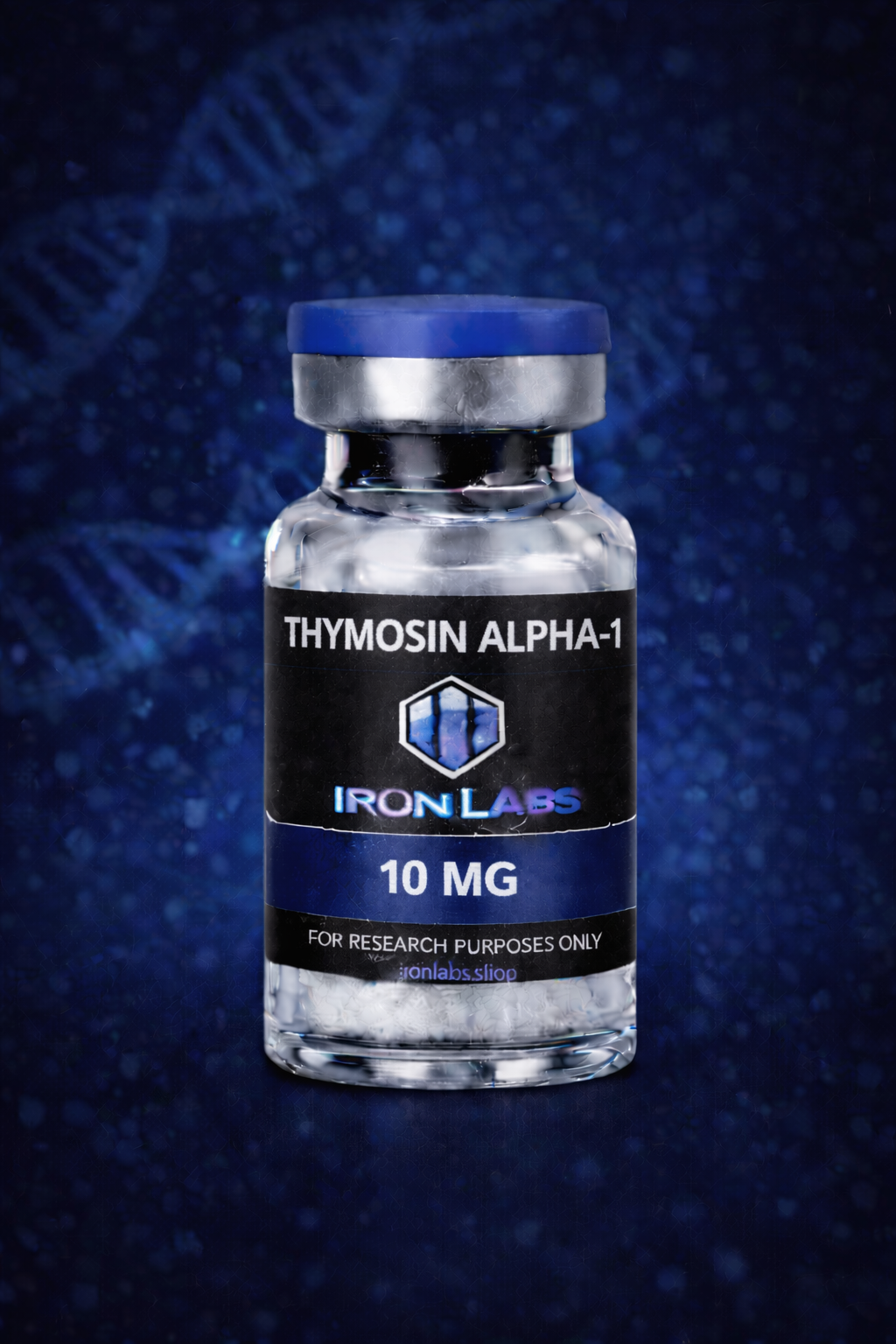
Iron Labs Thymosin Alpha-1 is supplied as lyophilized powder accompanied by third-party COA documentation, including HPLC purity and mass spectrometry identity confirmation, to support research reproducibility. Source Thymosin Alpha-1 for your research → Iron Labs Research Catalog
Frequently Referenced Research Questions
Is Thymosin Alpha-1 the same as Thymosin Beta-4? No. Thymosin Alpha-1 and Thymosin Beta-4 (the parent compound of TB-500) are structurally distinct peptides studied in different research contexts—immune modulation versus tissue repair, respectively.
Why is Thymosin Alpha-1 referenced in vaccine research? Researchers have studied its capacity to modulate immune responses alongside antigens in experimental adjuvant models, making it a recurring reference point in immunology literature.
This Thymosin Alpha-1 Research Overview will be updated as new laboratory literature becomes available to support ongoing immune peptide research.
Regulatory Notice
Thymosin Alpha-1 is not FDA-approved for any human or veterinary therapeutic application. Iron Labs sells Thymosin Alpha-1 exclusively as a research chemical for use by qualified researchers and laboratories. No health, therapeutic, or cosmetic claims are made or implied. Background on thymic peptide research is available via PubMed.
Researchers using this Thymosin Alpha-1 Research Overview as background often note that experimental dosing and timing protocols vary considerably across published laboratory models, which is why reviewing methodology sections closely remains an important step before designing comparable research.