
For research use only. All peptides referenced are research chemicals not approved by the FDA for human use. Not for human consumption.
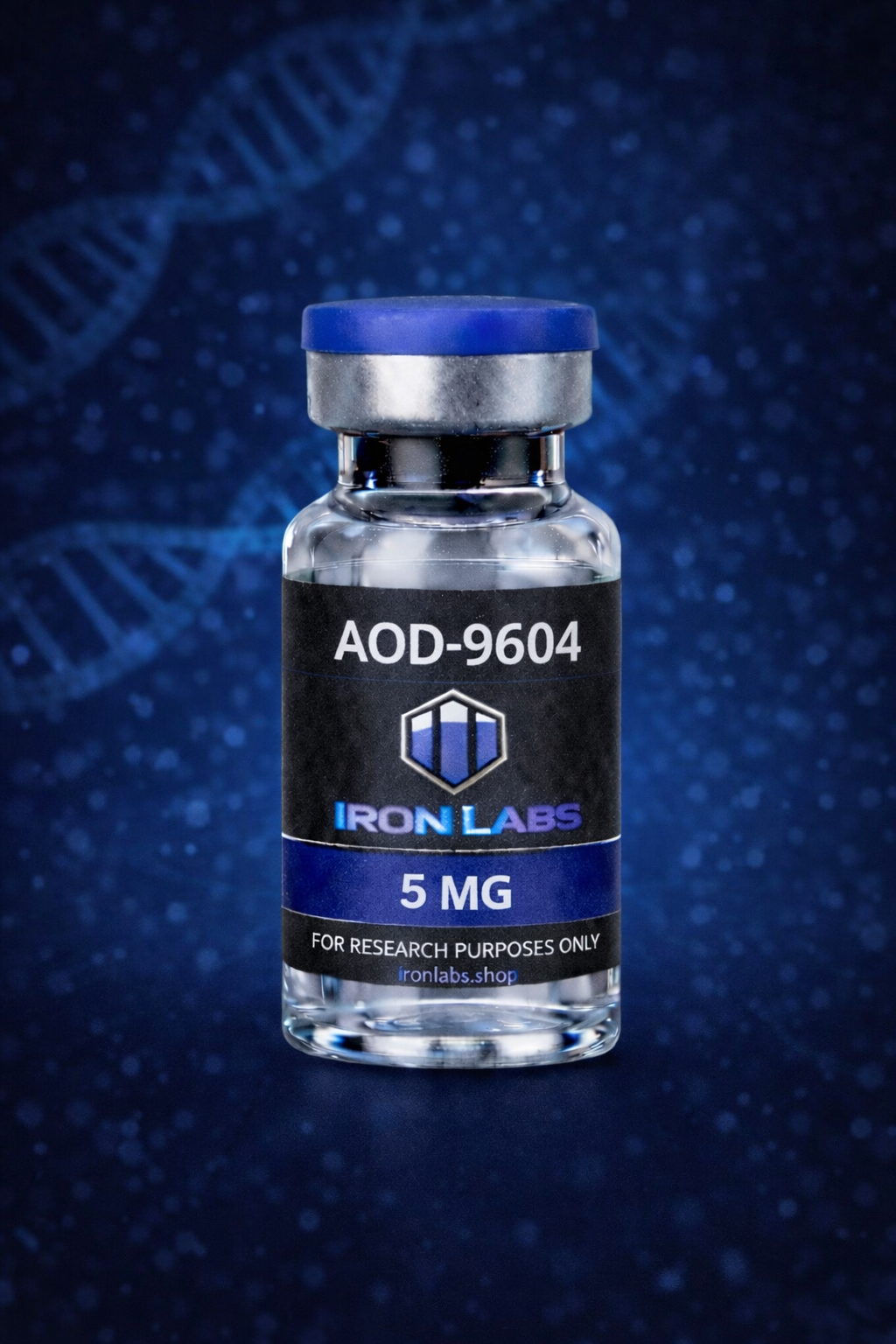
This AOD-9604 Research Overview examines AOD-9604, a modified fragment of human growth hormone corresponding to amino acids 176-191 of the hGH sequence. This fragment retains the region of hGH associated with lipolytic (fat metabolism) activity while excluding the domains responsible for growth-promoting and insulin-resistance effects, making it a frequent subject of metabolic research.
AOD-9604 Research Overview: Background & Discovery
AOD-9604 was developed by researchers seeking to isolate the fat-metabolizing region of the human growth hormone molecule from its growth-stimulating properties. This distinction has made it a recurring reference point in laboratory literature exploring lipolysis and metabolic regulation without the broader systemic effects associated with full-length hGH research models.
Research Areas & Mechanisms
This AOD-9604 Research Overview highlights several mechanisms explored in laboratory research:
- Lipolysis signaling: In vitro and animal studies have examined AOD-9604’s effect on triglyceride breakdown within adipocyte cell models.
- Lipogenesis inhibition: Laboratory research has investigated its role in reducing new fat cell formation in metabolic tissue cultures.
- Cartilage and connective tissue research: Some studies have explored AOD-9604 in models examining cartilage repair signaling, an area of ongoing laboratory interest.
- Metabolic rate studies: Animal models have investigated whether AOD-9604 influences energy expenditure markers distinct from growth hormone pathways.
- Receptor specificity research: Laboratory studies have examined how AOD-9604 interacts with metabolic signaling receptors without triggering IGF-1-mediated growth effects.
Across these research areas, AOD-9604 is generally studied as a metabolically-targeted fragment rather than a broad growth hormone substitute.
AOD-9604 vs. Tesofensine in Research Context
AOD-9604 and Tesofensine are both referenced in metabolic and weight-related research, but their mechanisms differ substantially. Tesofensine research centers on monoamine reuptake inhibition and central nervous system appetite signaling. AOD-9604 research instead focuses on peripheral lipolysis pathways derived from growth hormone fragment biology, making the two compounds complementary reference points across central versus peripheral metabolic research models.
Laboratory Handling
AOD-9604 is typically supplied as a lyophilized powder and should be stored at -20°C prior to reconstitution. Once reconstituted with bacteriostatic water, store refrigerated at 2-8°C and use within 14-21 days for research consistency. Avoid repeated freeze-thaw cycles and extended light exposure.
Source AOD-9604 from Iron Labs
Iron Labs AOD-9604 is supplied as lyophilized powder accompanied by third-party COA documentation, including HPLC purity and mass spectrometry identity confirmation, to support research reproducibility. Source AOD-9604 for your research → Iron Labs Research Catalog
Frequently Referenced Research Questions
Is AOD-9604 the same as HGH? No. AOD-9604 is a small fragment corresponding to a specific region of the HGH molecule and does not replicate the full hormone’s growth-promoting or IGF-1-stimulating activity.
Why is AOD-9604 studied separately from growth hormone secretagogues? Researchers reference it separately because its mechanism is tied to a specific lipolytic fragment rather than stimulating endogenous hormone release, distinguishing it from compounds like Ipamorelin or CJC-1295 in comparative literature.
This AOD-9604 Research Overview will be updated as new laboratory literature becomes available to support ongoing metabolic peptide research.
Regulatory Notice
AOD-9604 is not FDA-approved for any human or veterinary therapeutic application. Iron Labs sells AOD-9604 exclusively as a research chemical for use by qualified researchers and laboratories. No health, therapeutic, or cosmetic claims are made or implied. Background on growth hormone fragment research is available via PubMed.
This AOD-9604 Research Overview also notes that researchers frequently pair fragment-based metabolic peptides with broader dietary or exercise-based experimental models to help isolate the specific contribution of the peptide from other confounding metabolic variables in animal studies.