For research use only. All compounds referenced are research chemicals not approved by the FDA for human use. Not for human consumption.
This NAD+ Research Overview examines nicotinamide adenine dinucleotide (NAD+), a coenzyme found in every living cell that plays a central role in cellular energy metabolism, redox reactions, and DNA repair signaling. NAD+ has become one of the most extensively studied molecules in longevity and mitochondrial research due to its well-documented decline with age.
NAD+ Research Overview: Background & Discovery
NAD+ was first identified over a century ago in the context of fermentation biochemistry, long before its broader roles in cellular signaling were understood. Modern research has since revealed NAD+ as a central hub connecting energy metabolism, sirtuin enzyme activity, and DNA repair pathways, prompting renewed laboratory interest in maintaining or restoring NAD+ levels in aging research models.
Research Areas & Mechanisms
This NAD+ Research Overview highlights several mechanisms explored in laboratory research:
- Mitochondrial energy metabolism: Laboratory models have examined NAD+’s role as an essential cofactor in ATP production via oxidative phosphorylation.
- Sirtuin activation: Cell culture studies have investigated NAD+-dependent sirtuin enzymes and their role in regulating cellular stress responses.
- DNA repair signaling: Research has explored NAD+’s function as a substrate for PARP enzymes involved in DNA damage repair.
- Aging biology: Animal models have documented age-related decline in NAD+ levels across multiple tissue types, driving longevity research interest.
- Metabolic research: Studies have examined NAD+’s relationship to insulin sensitivity and broader metabolic health markers.
Across these research areas, NAD+ is generally studied as a foundational metabolic cofactor rather than a signaling peptide in the traditional sense.
NAD+ vs. Epitalon in Research Context
NAD+ and Epitalon are both frequently referenced in longevity research, but they operate through very different mechanisms. Epitalon research centers on telomerase activation and epigenetic regulation via pineal gland signaling pathways. NAD+ research instead focuses on cellular energy metabolism and sirtuin-mediated stress responses, making the two compounds common reference points in combined longevity research protocols examining complementary aging pathways.
Laboratory Handling
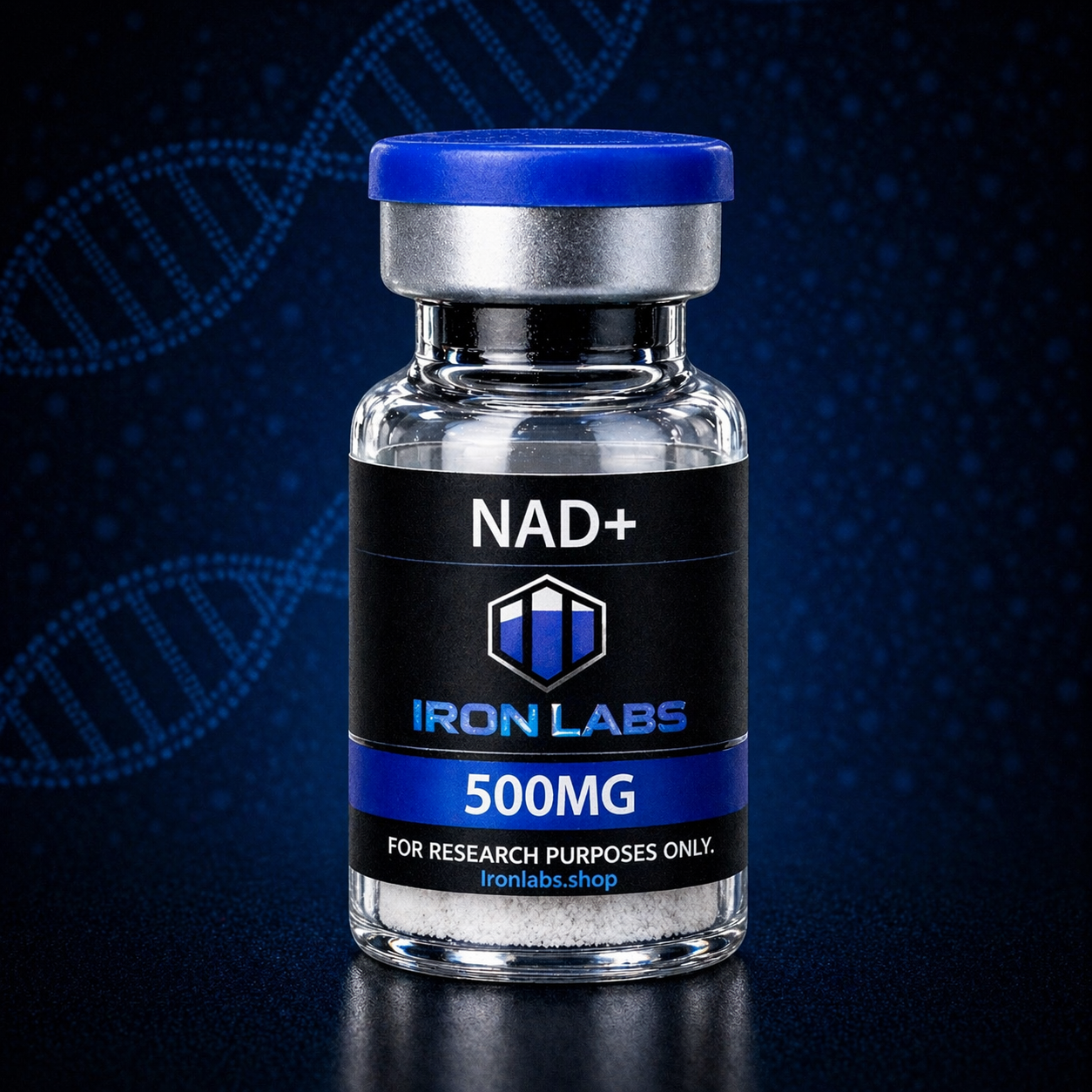
NAD+ is typically supplied as a lyophilized powder and should be stored at -20°C prior to reconstitution, protected from light due to its sensitivity to photodegradation. Once reconstituted, store refrigerated and use within the timeframe specified in current supplier documentation to maintain research consistency.
Source NAD+ from Iron Labs
Iron Labs NAD+ is supplied as lyophilized powder accompanied by third-party COA documentation, including HPLC purity and identity confirmation, to support research reproducibility. Source NAD+ for your research → Iron Labs Research Catalog
Frequently Referenced Research Questions
Is NAD+ a peptide? No. NAD+ is a dinucleotide coenzyme, structurally distinct from the amino-acid-based peptides that make up most of this research catalog, though it is frequently studied alongside peptides in longevity research contexts.
Why does NAD+ decline with age? Laboratory research has identified several contributing factors, including reduced biosynthesis and increased consumption by NAD+-degrading enzymes, both of which remain active areas of investigation.
This NAD+ Research Overview will be updated as new laboratory literature becomes available to support ongoing longevity research.
Regulatory Notice
NAD+ is not FDA-approved for any human or veterinary therapeutic application through Iron Labs. Iron Labs sells NAD+ exclusively as a research chemical for use by qualified researchers and laboratories. No health, therapeutic, or cosmetic claims are made or implied. Background on NAD+ metabolism research is available via PubMed.
This NAD+ Research Overview also notes that experimental models combining NAD+ precursors with exercise or caloric restriction protocols have shown additive effects on mitochondrial density and cellular resilience markers. Researchers studying age-related NAD+ decline often pair quantification assays with markers of oxidative stress to build a more complete picture of cellular energy status. As with other longevity-focused research compounds, standardized handling and storage protocols remain essential for maintaining sample integrity across extended study timelines.