For research use only. All peptides referenced are research chemicals not approved by the FDA for human use. Not for human consumption.
This Humanin Research Overview examines Humanin, a 24-amino-acid mitochondrial-derived peptide (MDP) encoded within the mitochondrial 16S ribosomal RNA gene region rather than nuclear DNA. Since its discovery, Humanin has become a significant focus of longevity and cytoprotection research due to its unusual origin and its documented signaling activity across multiple cell types.
Humanin Research Overview: Background & Discovery
Humanin was originally identified in research examining surviving neurons from Alzheimer’s disease-affected brain tissue, where researchers discovered a short open reading frame within mitochondrial DNA capable of producing a bioactive peptide. This discovery helped establish the broader research category of mitochondrial-derived peptides, of which Humanin remains the most extensively studied example.
Research Areas & Mechanisms
This Humanin Research Overview highlights several mechanisms explored in laboratory research:
- Cytoprotective signaling: Cell culture studies have examined Humanin’s capacity to protect cells from apoptotic stress in neuronal and non-neuronal models.
- Neuroprotection research: Laboratory models have investigated Humanin’s role in models relevant to neurodegenerative disease research.
- Mitochondrial signaling: Research has explored how Humanin, despite being mitochondrially encoded, signals through cell-surface and intracellular receptor pathways.
- Metabolic research: Animal models have examined Humanin’s relationship to insulin sensitivity and glucose metabolism markers.
- Cardiovascular research: Some laboratory studies have investigated Humanin in models of cardiac cell stress and survival signaling.
- Aging biology: Researchers have studied circulating Humanin levels as a potential biomarker in longevity-focused research models.
Across these research areas, Humanin is generally studied as a stress-response signaling peptide rather than a structural or metabolic hormone analog.
Humanin vs. MOTS-C in Research Context
Humanin and MOTS-C are both classified as mitochondrial-derived peptides, but their primary research focuses differ. MOTS-C research centers heavily on metabolic regulation, exercise physiology, and AMPK pathway activation. Humanin research instead concentrates more heavily on cytoprotection and neurodegenerative disease models, though both peptides appear together frequently in broader mitochondrial peptide and longevity research literature.
Laboratory Handling
Humanin is typically supplied as a lyophilized powder and should be stored at -20°C prior to reconstitution. Once reconstituted with bacteriostatic water, store refrigerated at 2-8°C and use within 14-21 days for research consistency. Avoid repeated freeze-thaw cycles and extended light exposure.
Source Humanin from Iron Labs
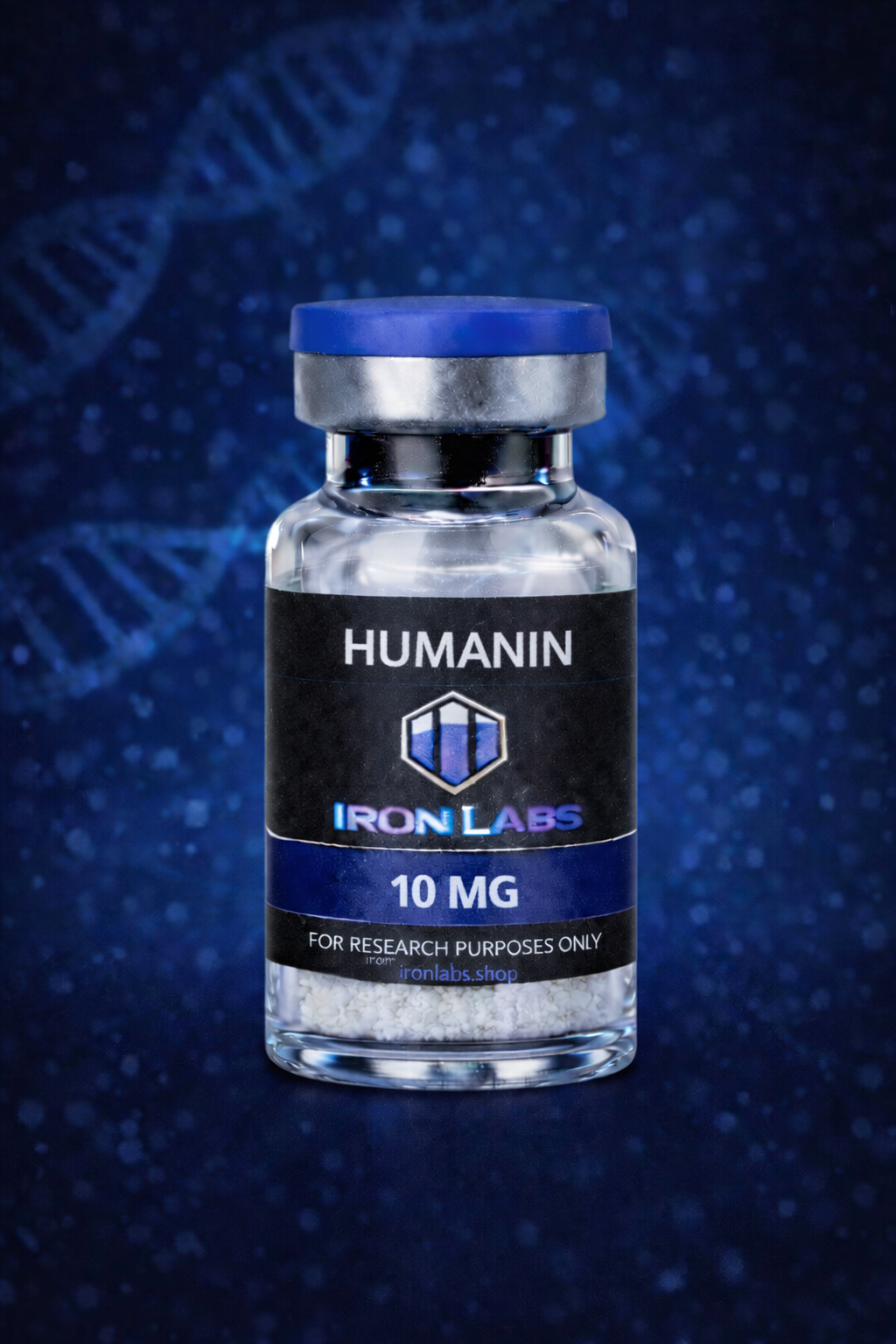
Iron Labs Humanin is supplied as lyophilized powder accompanied by third-party COA documentation, including HPLC purity and mass spectrometry identity confirmation, to support research reproducibility. Source Humanin for your research → Iron Labs Research Catalog
Frequently Referenced Research Questions
Is Humanin encoded in nuclear DNA? No. Humanin is unique among most research peptides in that its coding sequence resides within mitochondrial DNA rather than the cell nucleus, which is part of why it is classified as a mitochondrial-derived peptide.
Why is Humanin studied alongside longevity research? Researchers have observed changes in circulating Humanin levels across age-related research models, prompting interest in its potential role as a biomarker and signaling molecule in aging biology.
This Humanin Research Overview will be updated as new laboratory literature becomes available to support ongoing mitochondrial peptide research.
Regulatory Notice
Humanin is not FDA-approved for any human or veterinary therapeutic application. Iron Labs sells Humanin exclusively as a research chemical for use by qualified researchers and laboratories. No health, therapeutic, or cosmetic claims are made or implied. Background on mitochondrial-derived peptide research is available via PubMed.
This Humanin Research Overview also notes that because Humanin is one of several identified mitochondrial-derived peptides, researchers often screen for cross-reactivity with related MDP sequences when designing assays, helping ensure that observed effects are attributable specifically to Humanin rather than overlapping peptide fragments.